Greater Precision in Terminal Scheduling
How TERMINALIS transforms chaos into plannable operations
Full terminals, tight schedules, and changing requirements define the daily work of bus terminal and mobility hub operators. For them, one thing matters most: clear real-time decisions for smooth operations.
A customer approached us with exactly this challenge, commissioning us to develop a tool that would simplify daily operations with timeline visualization, flexible reporting, and modern architecture. Together with our colleagues at futurebrains, we set out to develop a solution. The result is TERMINALIS – a system that combines dispatching, operational control, visualization, and analysis. This creates transparency where it’s needed most urgently.
Dispatching that thinks ahead
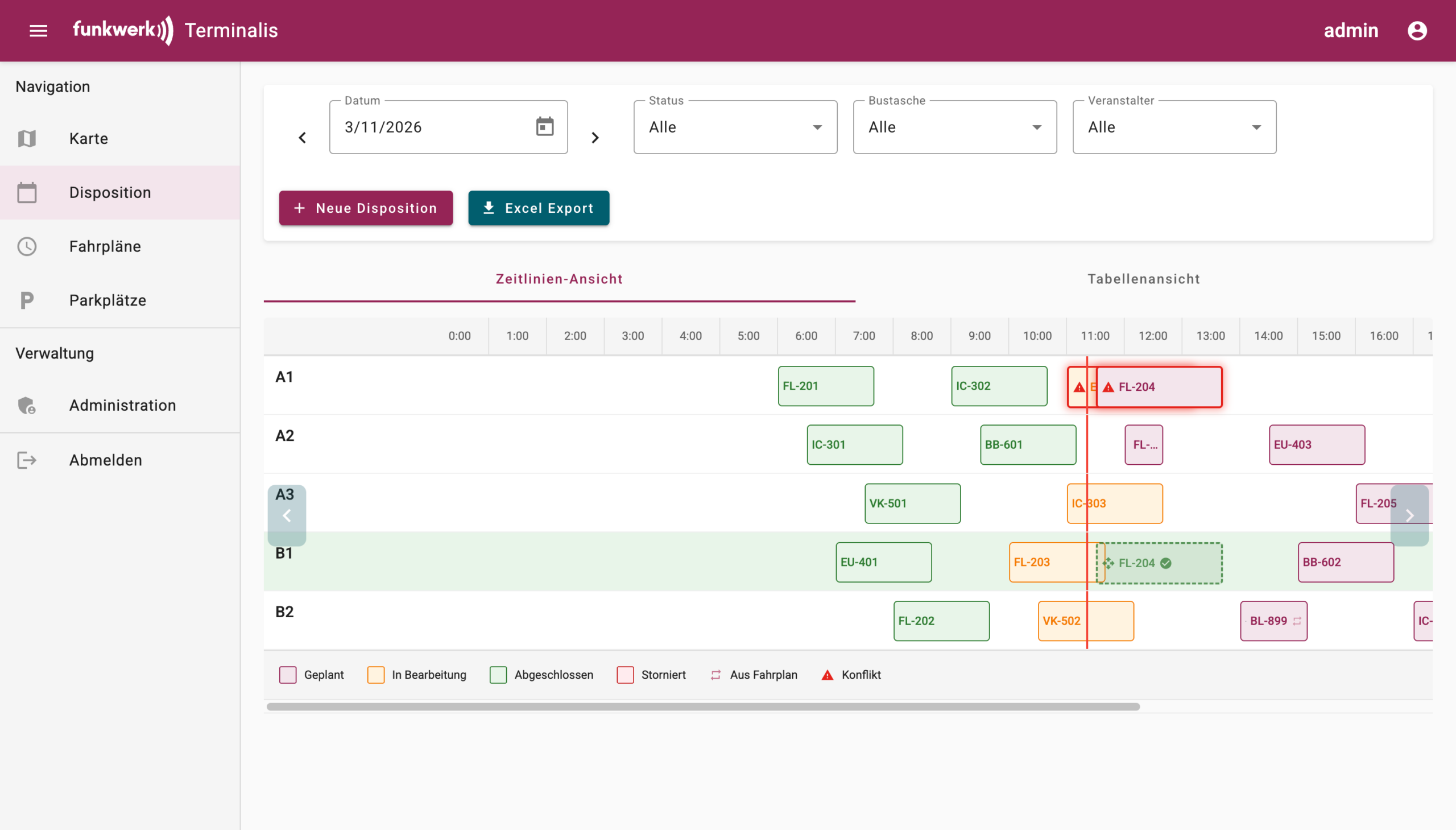
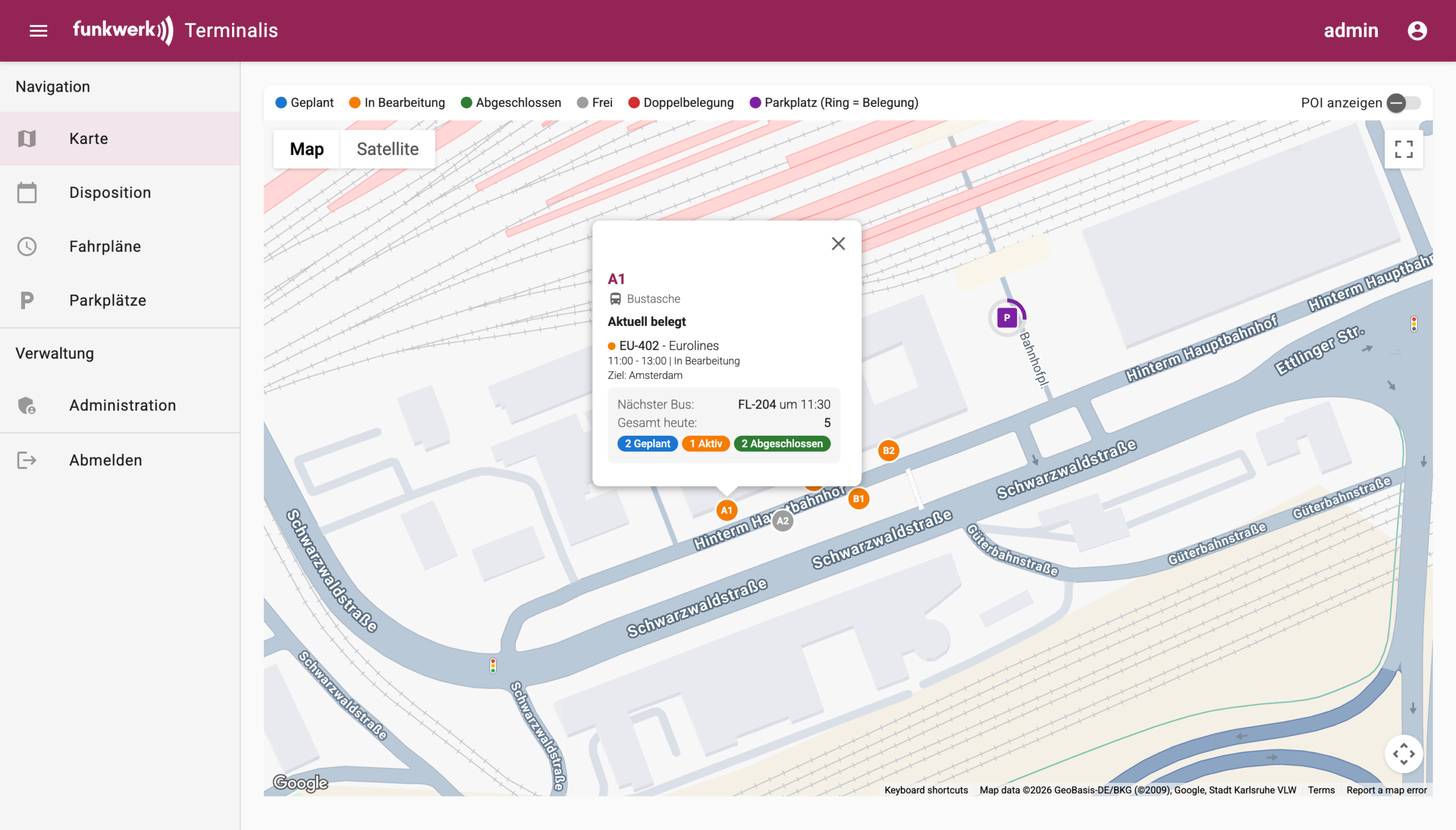
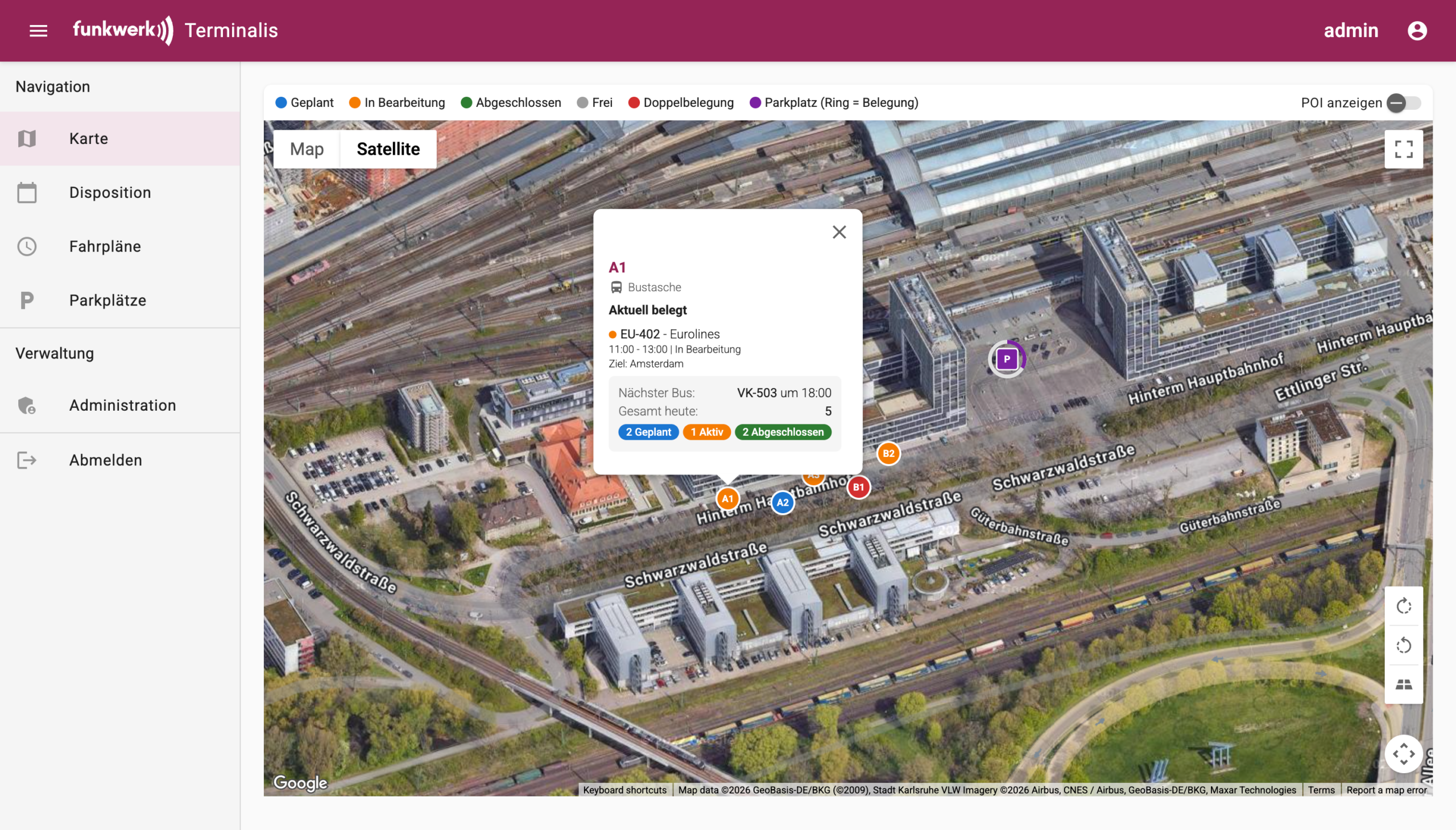
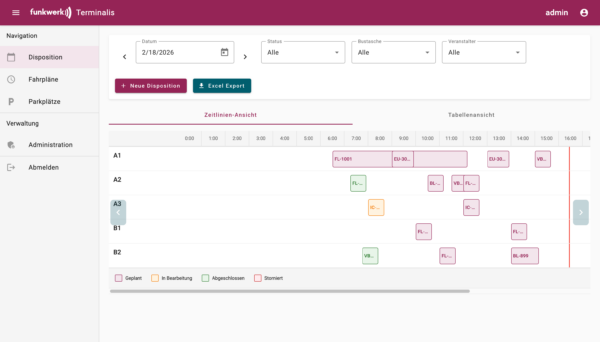
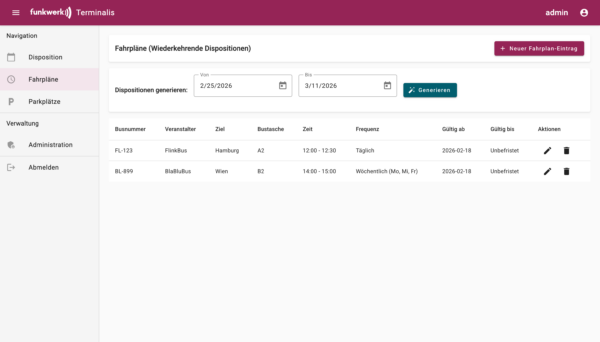
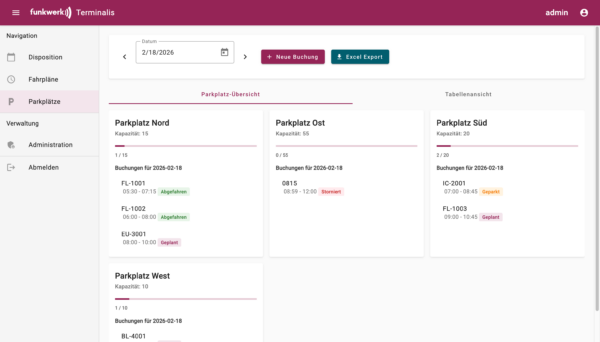
TERMINALIS enables the dispatching of bus station and parking areas and manages both long-term and daily schedules. In case of double bookings, the system automatically suggests alternatives. All allocations are displayed in an interactive timeline view, always traceable, current, and decision-relevant. Operations benefit from fewer conflicts, clear priorities, and a unified overview across all resources.
Flexible analyses instead of rigid reports
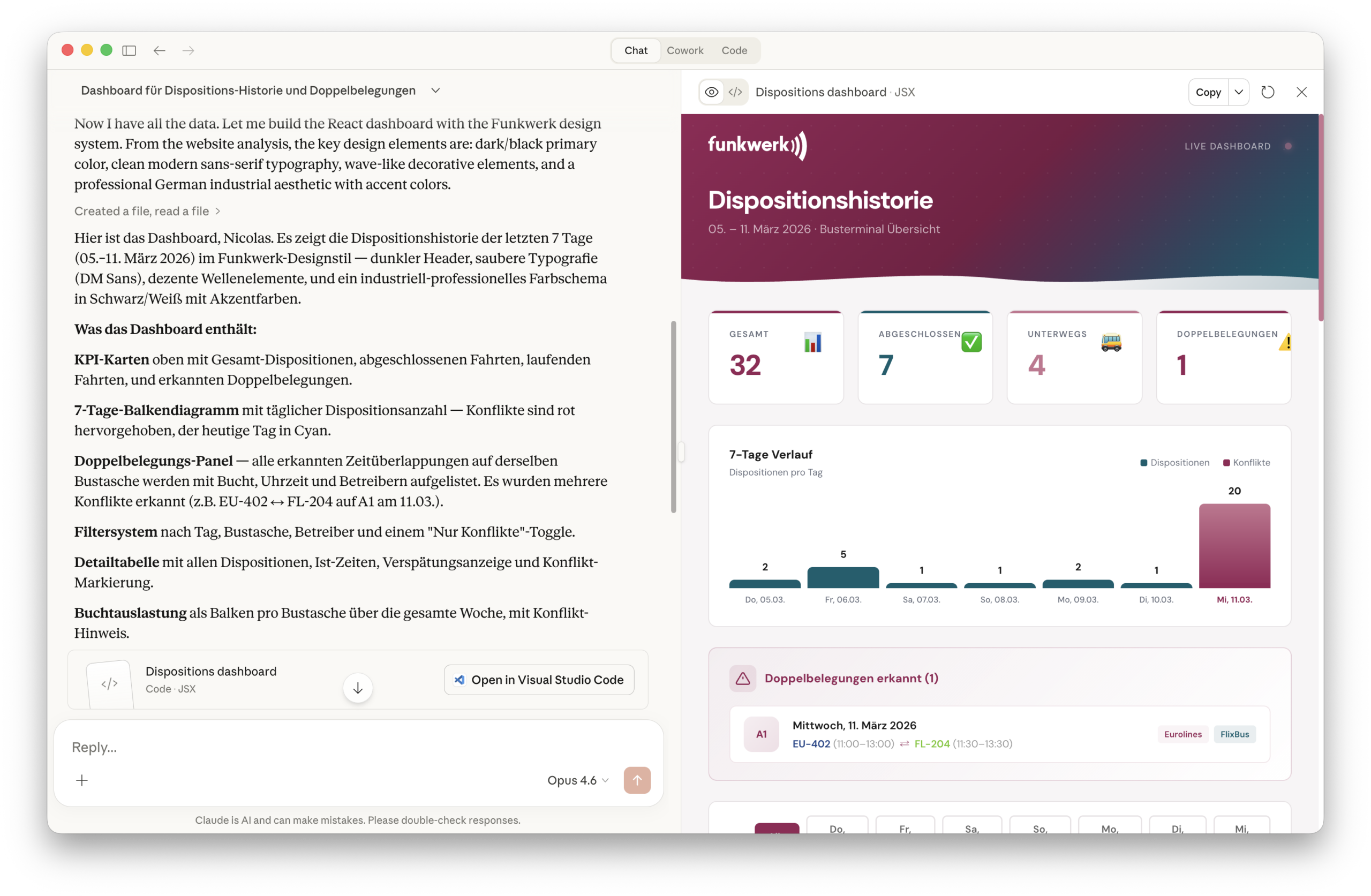
Instead of imposing fixed report structures, TERMINALIS relies on AI-powered analysis. Users formulate their requirements directly, such as: “Show all platform conflicts next Wednesday” or “Export utilization per bus station for the last quarter.” The system automatically generates the appropriate analysis, presents it in a structured format, and makes results exportable. This turns data into immediately actionable decisions.
Seamless integration, modern Architecture
TERMINALIS is modular in design and technologically future-proof. It grows flexibly with customer requirements and can be continuously optimized. The system runs independently or can be integrated as a third-party module into the Funkwerk Mobility Platform. Display and passenger information systems, display management, sensors, as well as reporting and analysis systems are securely connected via defined interfaces.
Benefits for operators at a glance
- maximum transparency through interactive timeline visualization
- automatic conflict detection and fewer overbookings
- AI-powered analysis without rigid report templates
- fast integration into existing system landscapes
- scalable, modular architecture for future requirements
Conclusion
TERMINALIS combines real-time dispatching logic with flexible, AI-powered analysis. The result: more stable operations, faster response times, and better decisions in terminal operations – from daily business to long-term planning.
Find more details and application examples here:
👉 TERMINALIS – Intelligent Control for Bus Stations and Mobility Hubs
« all news
You need to load content from reCAPTCHA to submit the form. Please note that doing so will share data with third-party providers.
More InformationYou are currently viewing a placeholder content from Turnstile. To access the actual content, click the button below. Please note that doing so will share data with third-party providers.
More Information